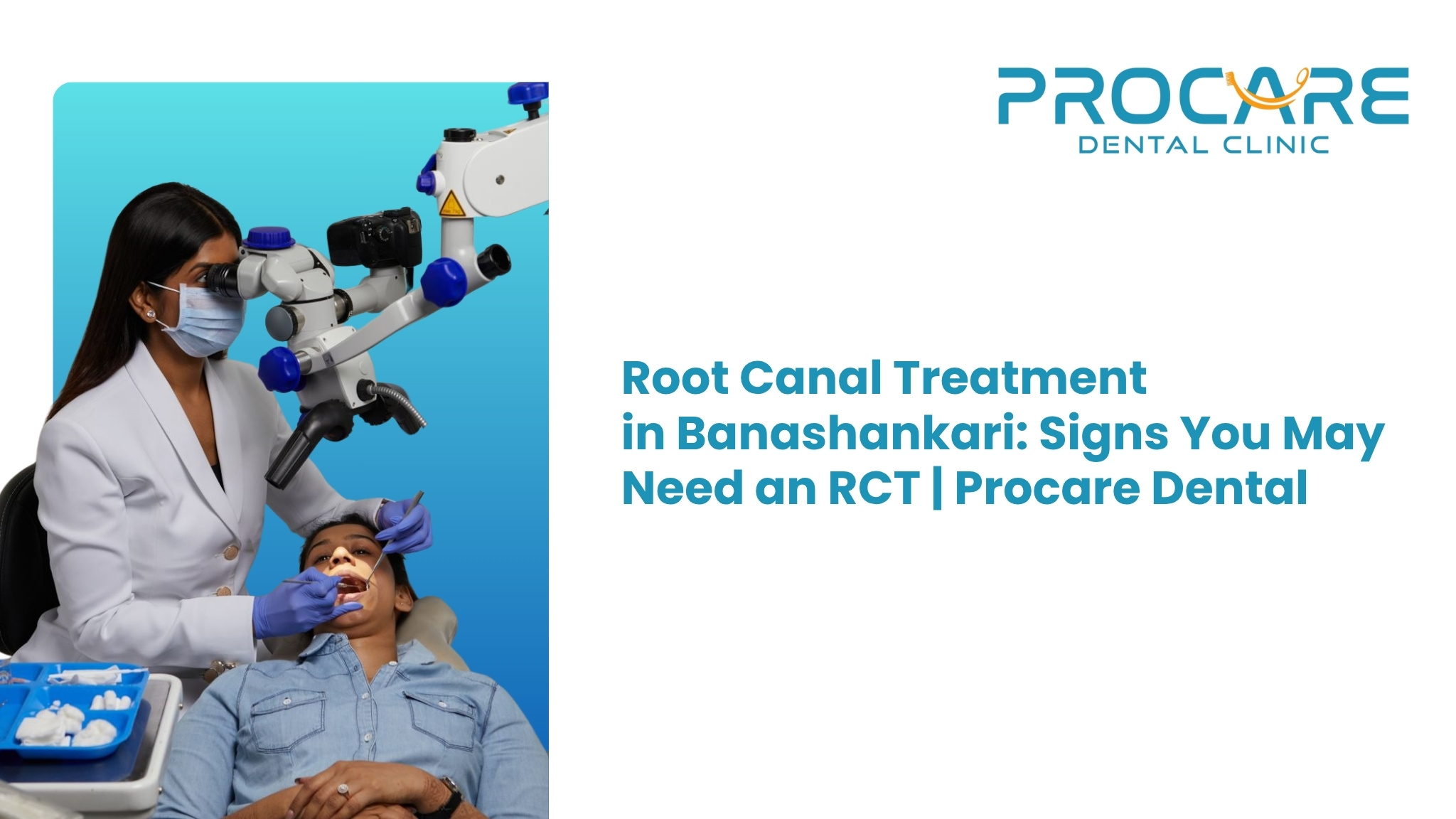
Tooth pain can sometimes be temporary, but persistent or severe pain may indicate that the inner part of the tooth has become infected or inflamed. When the dental pulp is affected, Root Canal Treatment (RCT) may be recommended to remove the infection, preserve the natural tooth, and restore its function.
If you are experiencing persistent toothache, sensitivity, swelling, or pain while chewing and are searching for Root Canal Treatment in Banashankari, a professional dental examination can help determine whether an RCT is appropriate for your tooth.
What Is Root Canal Treatment?
Root Canal Treatment in Banashankari is a dental procedure used to treat infection or inflammation inside a tooth. The affected pulp is carefully removed, the root canal system is cleaned and disinfected, and the tooth is then sealed.
Depending on the condition of the tooth, a dental crown may also be recommended to provide additional protection and restore chewing function.
The primary goal of an RCT is to save the natural tooth whenever possible rather than extracting it.
Why Does a Tooth Need a Root Canal?
The inner portion of a tooth contains nerves, blood vessels, and connective tissue known as dental pulp. If bacteria reach this area, inflammation or infection can develop.
Common causes include:
- Deep dental decay
- Cracked or fractured teeth
- Repeated dental procedures
- Dental trauma
- Large or defective fillings
- Untreated cavities
- Tooth wear that exposes the pulp
When the pulp becomes irreversibly inflamed or infected, RCT treatment in Banashankari may be recommended.
7 Signs You May Need Root Canal Treatment
1. Persistent Toothache
A toothache that continues for an extended period can be a warning sign of an underlying dental problem.
Pain may occur spontaneously or become worse when eating, drinking, or applying pressure to the affected tooth.
Persistent tooth pain should not be ignored because the underlying infection may continue to progress even if the pain temporarily decreases.
2. Severe Sensitivity to Hot or Cold
If a tooth becomes extremely sensitive to hot or cold foods and beverages, it may indicate irritation or inflammation of the dental pulp.
Normal sensitivity often disappears quickly after the trigger is removed. However, prolonged or intense sensitivity may require further evaluation by a dentist in Banashankari.
3. Pain While Chewing or Biting
Pain when biting down can indicate inflammation around the root of a tooth.
You may notice discomfort when:
- Chewing food
- Biting firmly
- Touching the tooth
- Applying pressure to the area
A dental examination can help determine whether the pain originates from the pulp, surrounding tissues, a crack, or another dental condition.
4. Swelling Around the Tooth
Swelling around a painful tooth can be a sign of infection.
You may notice swelling in:
- The gums
- The area around the tooth
- The cheek
- The jaw
If swelling develops along with fever, severe pain, or difficulty swallowing or breathing, seek urgent dental or medical care.
5. A Small Pimple or Abscess on the Gums
A recurring pimple-like bump on the gums near a tooth can sometimes indicate a dental abscess or draining infection.
Even if the pain decreases because the infection is draining, the underlying dental problem still requires professional evaluation.
6. Darkening or Discoloration of the Tooth
A tooth that becomes noticeably darker than neighboring teeth may have experienced trauma or changes affecting the pulp.
Discoloration does not automatically mean that you need an RCT, but it is a reason to have the tooth examined.
7. A Cracked or Broken Tooth
A crack can allow bacteria to reach the inner portion of the tooth.
Depending on the location and severity of the crack, treatment may involve a filling, crown, root canal treatment, or, in some cases, extraction.
A root canal dentist in Banashankari can assess the tooth and determine whether it can be preserved.
Can You Need an RCT Without Severe Pain?
Yes.
Not every infected or damaged tooth produces severe pain. Some dental infections may develop with relatively mild symptoms or even without noticeable discomfort.
For this reason, regular dental examinations are important, particularly if you have a history of extensive decay, dental trauma, or previous dental treatment.
What Happens During Root Canal Treatment?
Modern RCT procedures are designed to treat the infected or inflamed pulp while preserving the natural tooth.
Step 1: Dental Examination
Your dentist first evaluates the tooth and discusses your symptoms.
Step 2: Diagnostic Imaging
Dental X-rays or other imaging may be used to assess the roots, surrounding bone, and extent of the problem.
Step 3: Local Anesthesia
Local anesthesia is administered to keep the procedure comfortable.
Step 4: Accessing the Tooth
A small opening is created in the tooth to access the infected or inflamed pulp.
Step 5: Cleaning the Root Canals
The affected pulp tissue is removed and the root canal system is carefully cleaned and disinfected.
Step 6: Sealing the Canals
After cleaning, the canals are filled and sealed to help prevent reinfection.
Step 7: Restoring the Tooth
Depending on the remaining tooth structure and location of the tooth, your dentist may recommend a permanent filling or dental crown.
Why Is a Crown Sometimes Needed After RCT?
Root canal treatment removes infected pulp and saves the tooth, but the tooth may require additional structural protection afterward.
A crown can help protect a weakened tooth from further damage, particularly when substantial tooth structure has been lost.
Your dentist will determine whether a crown is appropriate based on the tooth’s condition, location, remaining structure, and chewing forces.
Is Root Canal Treatment Painful?
Many patients worry that RCT will be painful.
Modern dental techniques and local anesthesia are used to make the procedure as comfortable as possible. Some tenderness or sensitivity may occur after treatment, particularly for a few days.
If you experience severe or persistent pain after treatment, contact your dentist for an evaluation.
RCT vs Tooth Extraction: Which Is Better?
When a tooth can be predictably restored, preserving the natural tooth is generally an important consideration.
Root canal treatment allows the natural tooth to remain in place, while extraction removes it entirely.
After an extraction, replacing the missing tooth may require:
- Dental implants
- Dental bridges
- Removable dentures
The appropriate choice depends on the condition of the tooth and your overall oral health.
A root canal specialist in Banashankari can evaluate whether your tooth can be saved with RCT.
What Happens If You Delay Root Canal Treatment?
If a tooth has an infection that requires root canal treatment, delaying care can allow the infection to progress.
Possible complications can include:
- Increasing tooth pain
- Gum swelling
- Dental abscess
- Bone involvement
- Spread of infection to surrounding tissues
- Increased difficulty preserving the tooth
The absence of pain does not necessarily mean that an infection has resolved.
How Is an Infected Tooth Diagnosed?
Your dentist may use a combination of:
- Dental history
- Clinical examination
- Tooth sensitivity tests
- Percussion testing
- Bite testing
- Dental X-rays
- Additional imaging when required
These findings help determine whether the pulp is healthy, inflamed, infected, or no longer viable.
Can a Root Canal Save a Cracked Tooth?
It depends on the type and extent of the crack.
Some cracked teeth can be treated with RCT and subsequently protected with a crown. However, cracks extending below the gum line or into the root may make the tooth difficult or impossible to restore.
Early assessment gives the dentist a better opportunity to determine whether the tooth can be saved.
How Can You Prevent the Need for RCT?
While not every root canal can be prevented, good oral hygiene and regular dental care can reduce the risk of severe tooth decay and some dental infections.
Brush Twice Daily
Use fluoride toothpaste and brush thoroughly twice a day.
Floss Regularly
Cleaning between the teeth helps remove plaque and food particles that a toothbrush cannot reach effectively.
Limit Frequent Sugary Snacks
Frequent exposure to sugar can contribute to tooth decay.
Don’t Ignore Tooth Pain
Early dental evaluation can sometimes prevent a small cavity or dental problem from progressing into a more serious condition.
Protect Your Teeth During Sports
If you participate in contact or high-impact sports, using an appropriate mouthguard can help reduce the risk of dental trauma.
Schedule Regular Dental Checkups
Routine dental examinations can help identify cavities, cracks, gum problems, and other concerns before they become more advanced.
When Should You Visit a Dentist for Tooth Pain?
Consider scheduling a dental appointment if you have:
- Persistent toothache
- Sensitivity that lingers
- Pain when biting
- Gum swelling
- A recurring gum boil
- Tooth discoloration
- A broken or cracked tooth
- Bad taste or drainage around a tooth
- Previous trauma to the tooth
If symptoms are severe or rapidly worsening, seek prompt dental care.
Why Choose Procare Dental for Root Canal Treatment in Banashankari?
If you are looking for Root Canal Treatment in Banashankari, Procare Dental focuses on comprehensive dental diagnosis and treatment designed around individual patient needs.
When evaluating a clinic for RCT, patients should consider factors such as:
- Detailed diagnosis before treatment
- Appropriate dental imaging
- Modern root canal techniques
- Infection control
- Proper restoration after RCT
- Follow-up care
- Experience in treating complex dental problems
Choosing a dental provider who focuses on preserving natural teeth can help you understand all available treatment options before deciding between RCT and extraction.
Frequently Asked Questions About Root Canal Treatment
What are the main signs that I need a root canal?
Persistent toothache, prolonged sensitivity to hot or cold, pain while biting, swelling, a gum abscess, tooth discoloration, and a cracked tooth can be possible signs that RCT may be required.
Can a tooth infection go away on its own?
A dental infection involving the pulp generally requires professional dental treatment. Symptoms may temporarily improve, but this does not necessarily mean the underlying infection has been eliminated.
How long does root canal treatment take?
Treatment time varies depending on the tooth, complexity of the root canal system, severity of infection, and whether additional procedures are required.
Will I need a crown after RCT?
Some teeth, particularly back teeth or teeth with significant structural loss, may benefit from a crown after root canal treatment. Your dentist will assess the tooth and recommend the appropriate restoration.
Is RCT better than extraction?
When a tooth can be predictably restored, RCT can preserve the natural tooth. Extraction may be necessary when the tooth cannot be restored.
Can I eat normally after a root canal?
Your dentist will provide specific instructions based on the treatment and restoration. Avoid chewing heavily on a temporarily restored tooth until your dentist confirms that it is safe.
How do I find the best dentist for root canal treatment in Banashankari?
Look for a dental clinic that provides comprehensive diagnosis, appropriate imaging, modern treatment techniques, proper restoration, and follow-up care. A consultation can help you understand whether RCT is the right option for your tooth.
Conclusion
A persistent toothache, prolonged sensitivity, pain while chewing, swelling, discoloration, or a cracked tooth can sometimes indicate damage or infection inside the tooth. Root Canal Treatment can often help remove the infection while preserving the natural tooth.
If you’re experiencing these symptoms, don’t wait for the pain to become severe. An evaluation by a dentist in Banashankari can determine the cause of your symptoms and whether RCT treatment in Banashankari can help save the affected tooth.
For patients looking for Root Canal Treatment in Banashankari, Procare Dental can provide an assessment of the affected tooth and discuss suitable treatment and restoration options.